When Hackers Reach the Cold Case: Cyber Attacks as CPI/PRI Triggers
By Joe Bermudez, CPI/PRI Expert
How a cyber attack may satisfy Covered Incident or Insured Event triggers across the food, consumer goods, electronics, and auto industries.
The Coverage Question
CPI/PRI Covers the Product Event, Not the Attack
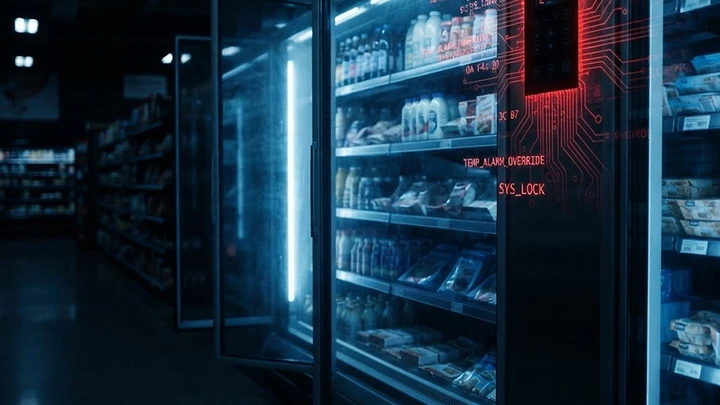
Recent reporting that French supermarkets face losses in the millions after a cyberattack hit refrigeration systems nationwide is a reminder that the modern supply chain runs on connected equipment. When a hacker can switch off a refrigerated display case, alter a controller setpoint, or corrupt the software inside a product, the result is often not a “data” loss at all. It is a physical product and/or regulatory problem: spoiled food, unsafe goods, and recalls.
This article explains how the circumstances involving a cyber attack may satisfy the Covered Incident or Insured Event requirements in contaminated product insurance and product recall insurance (“CPI/PRI”) wordings. The CPI/PRI Insuring Agreements are triggered by a Covered Incident or Insured Event, not by a peril such as “fire” or “hacking.” The definitions describe conditions of the product, such as contamination, mislabeling, or alteration. They usually do not list the cause.
Certain CPI/PRI Insurers specifically address cyber events via endorsements. The endorsements do not expand coverage. The role of the endorsements is to confirm that a cyber cause does not defeat an otherwise covered event.
The Practical Test
Ask what happened to the product. If the attack contaminated, impaired, mislabeled, altered, or created a defect in an Insured Product that poses the required danger, the cyber origin is generally not a barrier to coverage. The claim’s circumstances and each policy’s specific definitions, terms, exclusions, and endorsements still decide the outcome.
Trigger Analysis 01
Accidental Contamination or Impairment
Picture the French scenario at a manufacturer or distributor’s own cold-chain facility. An attack shuts down or reprograms refrigeration, temperatures climb, and product suffers microbial growth. Accidental Contamination, generally defined as accidental or unintentional contamination of an Insured Product and causes the Insured Product to differ from its usual condition provided the contamination occurs during production, preparation, manufacture, packaging, storage, or distribution and where use or consumption may result in or results in Bodily Injury or Property Damage.
Is a deliberate hack “accidental”?
From the Insured’s perspective, temperature abuse caused by an outside attacker is unintended. The language focuses on the contamination of the product, and the attacker’s intent is more naturally analyzed under Malicious Product Tampering. Because incident classification may affect limits, retentions, and exclusions, it should be addressed early.
Trigger Analysis 02
Malicious Product Tampering
When an attacker’s purpose is to harm the company or consumers, Malicious Product Tampering is often the most natural fit. “Malicious” requires “clear evidence” of an intention to cause financial loss or damage to the Insured or the Insured Product, or to use the product to cause Bodily Injury or Property Damage.
Nothing in the definitions requires hands-on access. An attacker who remotely changes an ingredient-dosing setpoint, disables a pasteurization step, or deliberately lets a cold chain fail has “altered” or “contaminated” the product as surely as one who opens a jar. In these instances, Malicious Product Tampering may also receive favorable treatment.
Trigger Analysis 03
Product Extortion
Ransomware may fall within the Product Extortion definition. Depending on the specific definition, a message saying, in substance, “pay us or we will change your recipe parameters, shut down your cold storage, or push contaminated lots into the market” is a threat to commit Malicious Product Tampering. In many CPI/PRI forms, Product Extortion Costs are not subject to a Self-Insured Retention.
Product, not data: A pure data-encryption ransom does not qualify. The threat must be to tamper with the product.
Follow the conditions: Immediately notify the approved Crisis Consultant, cooperate closely, and make “very reasonable effort to determine that the threat of Product Extortion is genuine.”
Trigger Analysis 04
Governmental Recall
Many cyber-caused product events end with a regulator. Governmental Recall generally includes a voluntary recall initiated as a result of an investigation or reporting by a Regulatory Agency and classified Class I or Class II, an official recall order, or suspension of the Insured’s facility registration. If temperature abuse or tampering caused by a cyber attack leads FDA, USDA, CFIA, or EFSA to act, the recall itself may satisfy the Governmental Recall triggers.
Industry Perspective
Beyond Food: Consumer Goods, Electronics, and Auto
PRI forms written for non-food manufacturers utilize similar triggers, and cyber attacks map onto them as well. PRI forms generally define Covered Incident or Insured Event as the discovery of a defect, inadequacy, deficiency, design error, breach of warranty, impaired property, or epidemic failure, which occurs during or results from the Insured Product’s manufacture, production, assembly, or distribution and poses and actual or imminent danger of Bodily Injury or Property Damage, resulting in a recall ordered by a Governmental Agency or initiated voluntarily. Under certain PRI policies, Insured Product expressly includes “software”.
An attacker who compromises a production line or firmware-flashing station and inserts corrupted code into brake, airbag, battery-management, or appliance-control modules creates a defect “during or as a result of its manufacture.” A resulting NHTSA or CPSC recall fits the trigger.
Limits a cyber claim must address
Malicious-tampering exclusion: Certain CPI/PRI forms exclude “any liability resulting from any alleged, threatened or actual willful and/or malicious product tampering,” which may leave this specific risk to another insurance program.
Data is not Property Damage: Most CPI/PRI forms exclude “any destruction, distortion, erasure, alteration or corruption of any computer data, coding, or program” from Property Damage.
Software as product: Certain CPI/PRI forms expressly include software in the definition of Insured Product.
Terrorism and war: Are usually excluded under CPI/PRI.
Closing Perspective
Practical Takeaways
Analyze the product outcome first. Where the LMA5480 or similar endorsement is attached, it confirms a cyber origin is not a barrier.
Classify carefully. Impairment versus Malicious Product Tampering, Product Extortion versus data ransom, and Defect versus excluded tampering determine limits, retentions, and exclusions.
Give notice early. Notice is critical under CPI/PRI, as the policies are written on a claims-made basis.
Preserve evidence. Keep digital forensics, controller logs, and physical product samples, and coordinate with law enforcement where appropriate.
Check the whole program. Cyber, property, and CPI/PRI policies may each respond. Discuss specific events and issues with your retail and wholesale brokers.
Industries that depend on refrigeration, process controls, embedded electronics, and connected supply chains now face product risks that can begin with a keyboard. For CPI/PRI, the coverage question is the same as it has always been: what happened to the product?
Disclaimer
The information provided is for educational purposes and does not constitute legal or insurance advice. Consult qualified professionals for specific coverage questions.
More articles
View archive

Transparency: The One Step That Changes Everything in CPI/PRI Claims
CPI/PRI claims move faster when the people around the claim share an early, usable view of what happened. A clean, one-page preliminary summary organizes the work, exposes the real information gaps, and turns broad requests into targeted questions.

Does Adverse Publicity = Covered Loss?
A trigger is only the beginning. In CPI/PRI, satisfying an Insured Event definition and proving covered Loss are related but distinct steps. A stakeholder guide to causation, timing, and the difference between a triggered Insured Event and a covered amount of Loss.


Third Party Recall Liability Does Not Transform Your CPI/PRI Policy into a CGL Policy
A stakeholder guide to Third Party Recall Liability Coverage — what TPRL actually covers, why it does not transform your CPI policy into a general liability policy, and the jurisdiction and wording factors that shape coverage.

