Temperature Abuse During Storage: Does Accidental Contamination Reach the Warehouse?
By Joe Bermudez, CPI/PRI Expert
A recall case showing how a warehouse cooling-system failure tests the Accidental Contamination trigger, and why the presence or absence of “storage” in the definition is often outcome-determinative.
Claim Circumstances
A Warehouse Cooling Failure Triggers a Class I Recall
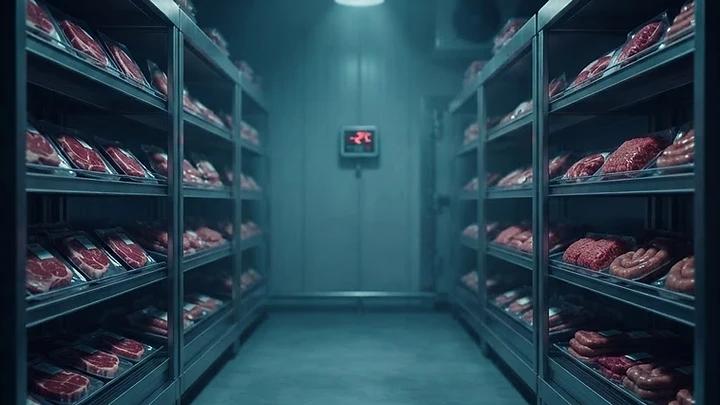
Kayem Foods Inc. (Chelsea, Massachusetts) voluntarily recalled approximately 1,584,361 pounds of ready-to-eat (RTE) meat and poultry products after a warehouse cooler malfunction caused temperature deviations during storage. USDA FSIS classified the recall as Class I, meaning there is a reasonable probability that use of the product will cause serious adverse health consequences or death. No illnesses were confirmed. The affected products were produced between approximately March 31, 2026 and October 7, 2026 and were distributed nationwide to U.S. retail and foodservice locations and to Hong Kong, with the possibility that product remained in consumer or customer refrigerators.
Establishment numbers inside the USDA mark of inspection included EST. M/P 7839, EST. P 20935A, and EST. M 9520. Affected items covered hot dogs and frankfurters, bacon, brisket, ham, chicken sausage, and other RTE products under brands such as Kayem, Al Fresco, Genoa, and Triple M. Consumers were advised not to consume the products and to discard or return them.
The timeline governs the coverage analysis. On October 1, 2026, a retail customer complained of warm product temperatures at the point of delivery. Investigation determined that various RTE meat and poultry products had been stored in a warehouse cooler that experienced temperature deviations caused by a cooling-system malfunction, and the issue was corrected. FSIS announced the voluntary recall (Recall 026-2026) on October 17, 2026, and the company stated the recall was conducted out of an abundance of caution.
Coverage Dispute
Does “Storage” Fall Within Accidental Contamination?
CPI/PRI forms generally define Accidental Contamination as any accidental or unintentional contamination, impairment, or mislabeling of an Insured Product that occurs during or as a result of its production, preparation, manufacture, packaging, co-packaging, or distribution, and that has resulted in or would result in Bodily Injury or Property Damage. The coverage flashpoint in a temperature-abuse event is whether post-production warehouse storage sits inside those defined activities.
Forms that expressly include storage, or that list it alongside production, packaging, and distribution, more readily encompass warehouse temperature-abuse events, provided the accidental and unintentional element and the Bodily Injury or Property Damage triggers are met. A Class I designation and the scientific risk of pathogen growth (for example Listeria or Salmonella in the danger zone, generally above 40°F) will typically support the “would result in bodily injury” prong even in the absence of confirmed illnesses.
Forms limited to production, preparation, manufacture, packaging, and distribution, without an express storage reference, invite dispute. Insurers may contend that post-production warehouse storage falls outside the defined activities, while insureds and brokers may argue that warehouse storage is integral to distribution or preparation for market. Resolution turns on precise wording, endorsements, and the factual timeline of when and where the temperature deviation occurred.
Some forms also contain storage-related exclusions, such as failure to adhere to the insured’s stated storage procedures. Even where storage is within the definition, such an exclusion, if factually applicable, can limit or bar recovery.
Bottom Line
A Class I recall driven by temperature abuse is not automatically covered. Coverage turns on whether the Accidental Contamination definition reaches storage, and on whether any storage-procedure exclusion applies to the facts.
Additional Coverage Considerations
Impairment, Alternative Triggers, and Causation
Impairment versus contamination. Many forms treat temperature abuse and potential spoilage as “impairment” rather than contamination, which can move the analysis onto a different definitional route.
Alternative triggers may respond. Government Recall and Adverse Publicity extensions can provide independent pathways depending on wording and claim circumstances.
Causation must be established. Loss must be shown to result solely and directly from the Insured Event.
Supply-chain exposure travels downstream. Customers and distributors may carry their own CPI/PRI exposures or third-party recall cost provisions, raising third-party recall liability questions.
Role-Specific Guidance
Claims Professionals: Secure the Wording and the Temperature Record
Obtain the exact wording first. Pull the Accidental Contamination definition, every exclusion (especially storage, deterioration, and process-related), and all endorsements from the policy and schedule.
Secure the factual record. Warehouse temperature logs, cooler maintenance records, the cooling-system malfunction report, customer complaint details, production and distribution records, and internal investigation findings.
Confirm where the deviation occurred. Determine whether the temperature excursion falls within an activity listed in the definition or can reasonably be characterized as part of distribution or preparation for market.
Assess the Bodily Injury prong. Use the Class I classification, scientific literature on temperature abuse of RTE products, and any laboratory or FSIS findings.
Evaluate alternative triggers. Government Recall, Adverse Publicity, and any crisis-consultant or recall-expense provisions may respond even where storage sits outside the definition.
Document both sides early. Engage coverage counsel where the storage wording is ambiguous or disputed.
Underwriter and Broker Guidance
Decide on Storage Language Intentionally
Refrigerated storage is a material exposure. Ask about warehouse ownership and control, redundant cooling systems, continuous temperature monitoring, alarm protocols, and response procedures.
Choose storage language deliberately. Explicit inclusion of storage or warehousing in the Accidental Contamination definition reduces ambiguity, while silence or exclusion creates predictable dispute potential.
Consider targeted controls. Sub-limits or storage-related exclusions for temperature abuse can be paired with underwriting of the insured’s food-safety culture, HACCP programs, third-party warehouse controls, and prior temperature-deviation or recall history.
Brokers should educate clients. Warehouse temperature-abuse events are not automatically covered; coverage hinges on whether storage appears in the definition, and on any storage-procedure exclusion.
Negotiate at placement and renewal. Where a client’s operations involve significant refrigerated storage, seek explicit inclusion of storage or warehousing, and confirm limits for recall expense, product value, business interruption, and crisis response against production volume and distribution footprint.
Retain the claim exhibits. Advise clients to keep temperature logs, maintenance records, and investigation files; they become critical claim evidence.
Takeaway for CPI/PRI Claim Professionals
Wording Precision Is Often Outcome-Determinative
Wording precision matters. The presence or absence of “storage” in the Accidental Contamination definition often decides the outcome in temperature-abuse claims.
Class I status supports the trigger. Regulatory classification plus the scientific risk of pathogen growth generally satisfies the Bodily Injury prong even without confirmed illnesses.
Coordination improves results. Early, coordinated review by claims professionals and coverage counsel, and the policy’s crisis consultant, improves both coverage certainty and recall effectiveness.
Risk controls strengthen the insured’s position. Redundant cooling, continuous monitoring, and documented corrective actions reduce loss frequency and blunt any storage-related exclusion.
This event illustrates why storage language, cooling-system controls, and the factual temperature record should be examined together in any recall claim arising from temperature abuse during storage.
Disclaimer
Outcomes depend on specific policy wording, claim circumstances, and applicable law. The information provided is for educational purposes and does not constitute legal or insurance advice. Consult qualified professionals for specific coverage questions.
More case studies
View all

Distinguishing Design Defect from Manufacturing Error in a CPI Claim
When over-fortification triggered a recall, the Insured asserted three Insured Events. Targeted review of formulation documents, testing protocols, and multi-site production evidence showed a design-level failure, not a manufacturing error, and a design exclusion that applied across every asserted trigger.


Prior Knowledge, Application Representations, and the Limits of Adverse Publicity Coverage
When a published FDA Warning Letter drove an Adverse Publicity claim, targeted review of the application, pre-inception inspection history, and precise policy definitions showed prior knowledge, inadequate disclosure, and no triggered Insured Event, supporting denial without payment.

Pre-Policy Known Circumstances Bar Product Recall Coverage
When a pre-policy positive pathogen test and quarantine preceded a cross-contamination recall, the courts held a known “circumstance that could give rise to an insured event” barred coverage under the primary policy and the follow-form excess layers alike.

